


Best Games About Everyday Law for Game Night

Most people do not realize how often law shows up before breakfast. A text from a landlord. A return policy at checkout. A photo posted without permission. A traffic stop on the way home. That is exactly why games about everyday law hit differently than standard trivia. The best ones do more than ask for facts. They turn real-life gray areas into arguments, judgment calls, lucky breaks, and loud table talk.
That matters because nobody wants a game night that feels like a civics exam. If a legal game is going to earn a spot next to your party favorites, it has to move fast, start debates, and make people feel clever even when they are learning something new. The sweet spot is simple - practical law people actually run into, wrapped in competition that keeps everyone leaning in.
What makes games about everyday law actually fun
A lot of educational games miss the verdict because they confuse information with entertainment. They stack facts on cards, call it strategy, and wonder why the box gathers dust after one play. Everyday law works better when it is personal. Players care more when the scenario sounds like something that could happen to them, their roommate, their kid, or their group chat.
That is the first big test. Does the game ask questions people can picture in real life? Things like workplace rights, property disputes, online behavior, contracts, consumer protection, school rules, or what you can and cannot say to police. If the answer is yes, the table usually wakes up fast.
The second test is interaction. Great legal games are not built for silent turns. They need challenge, pushback, timing, and a little chaos. Law is rarely just recall. It is interpretation. That makes argument-based play more exciting than plain multiple choice, because players are not only answering - they are defending their answer, second-guessing the room, and deciding when to press their luck.
The third test is pace. If every round turns into a lecture, the game loses the room. But if it is all jokes and no substance, the legal angle feels thin. The best designs keep rulings short, outcomes clear, and momentum high.
Everyday law is bigger than courtroom drama
When people hear legal game, they often picture dramatic trials, surprise witnesses, and TV-style cross-examinations. That can be fun, but everyday law lives much closer to home. It covers the stuff that sneaks into ordinary decisions - signing something, recording a conversation, getting pulled over, borrowing money, dealing with neighbors, posting online, or buying a product that does not do what it promised.
That is why this category has more range than it gets credit for. A strong game about everyday law does not need players to know legal jargon. It just needs them to recognize the situation. Once that happens, the stakes feel real, and the discussion starts naturally.
For teens and adults, that practical angle is a huge part of the appeal. You are not memorizing old case names for no reason. You are testing what you think you know about rights, rules, fairness, and consequences. Sometimes you are right. Sometimes you are wildly confident and completely wrong. Both are fun.
The formats that work best
Not every game format can carry legal material well. Some make the topic feel stiff. Others bring it to life.
Scenario-based games are usually the strongest fit. They put players inside a situation and ask what happens next. That feels immediate, which is exactly what everyday law needs. Instead of asking for abstract definitions, the game says, here is the mess - now make the call.
Party-style competition also works surprisingly well. Legal topics can sound serious, but the table energy does not have to be. Fast rounds, challenge cards, interruptions, and swing moments make people forget they are learning until they start quoting what they learned later.
Trivia can work too, but only if it is mixed with some kind of strategy or social play. Pure recall has a ceiling. The moment one player knows more law than everyone else, the room tilts. Add objections, steals, judgments, or risk-reward choices, and suddenly more players stay involved.
Roleplay-heavy games can be great for the right crowd, though they are more hit or miss. Some groups love acting out legal conflicts. Others just want a fast, competitive game with less performance pressure. It depends on the room.
What to look for before you buy
If you are shopping for games about everyday law, the real question is not whether the theme sounds cool. It is whether the gameplay will still feel alive after the first round.
Look closely at the type of questions the game asks. Are they rooted in situations regular people actually face, or are they built around obscure rules that mostly reward specialist knowledge? A game can be accurate and still feel welcoming. In fact, that is usually the whole point.
You should also pay attention to replay value. Legal scenarios are strong because they invite discussion, but if every card leads to the same obvious answer, the surprise disappears quickly. Better games create tension by mixing confidence, judgment, and table politics. Sometimes the right answer matters most. Sometimes timing matters just as much.
Player count matters too. Some legal games are better for classrooms or small groups. Others are built for louder, looser game nights where people want to jump in, object, and stir things up. If your crowd likes banter, choose a game that rewards interruption and interaction rather than silent analysis.
And then there is tone. This one is easy to overlook. A game about law does not need to feel heavy to be useful. In fact, lighter tone often makes the learning stick better because players are relaxed enough to engage. Humor helps. So does a little competitive chaos.
Why these games work so well at the table
The biggest reason is simple - everyone has an opinion about what feels fair. The second a game puts a real-world legal situation on the table, people start reacting. They compare experiences. They argue from instinct. They remember stories. That is great for gameplay because it turns passive players into active ones.
It also creates a better kind of learning. People remember rules more clearly when they are attached to a moment. If a card sparks laughter, debate, or a dramatic comeback, the legal concept tied to it tends to stick. You are not just hearing an answer. You are watching it land.
That makes this category especially strong for mixed groups. You do not need a room full of future attorneys. You need people who like talking, guessing, competing, and being a little too sure of themselves. Families, college students, trivia fans, and party game regulars can all get something different out of it.
Where some law games lose the case
There are trade-offs in this category, and they are worth calling out. If a game tries too hard to be educational, it can flatten the fun. If it leans too hard into jokes, the law part can become window dressing. The good stuff sits right in the middle.
There is also the issue of accuracy versus simplicity. Everyday law is messy. Rules vary by state. Context changes outcomes. A game has to simplify enough to stay playable without turning every answer into legal mush. That balance is tricky. The strongest titles make clear that they are teaching practical concepts, not handing out personal legal advice.
Another challenge is intimidation. Some players hear legal theme and assume they are about to lose badly. Smart design solves that by making the game feel social first and educational second. The law becomes the fuel for the competition, not a barrier to entry.
The kind of legal game people actually replay
Replayable legal games have one thing in common - they create stories. Somebody bluffed with total confidence and got called out. Somebody burned a power card at exactly the right moment. Somebody argued a scenario so well the whole table changed sides. Those moments are what bring a game back out next weekend.
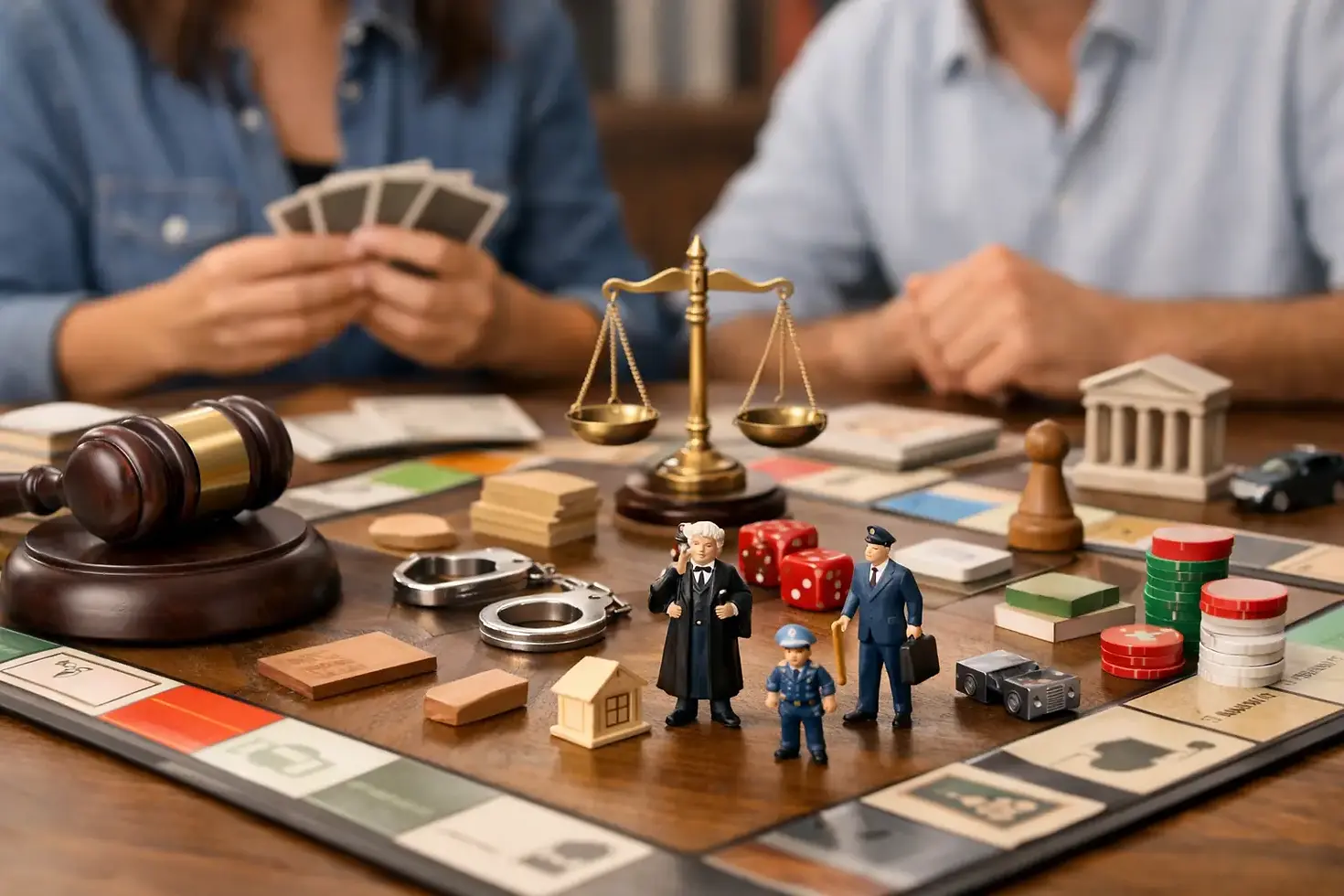
That is also why a board game built around courtroom energy can stand out in this space. When legal knowledge meets timing, challenges, and table interaction, the result feels less like study time and more like a showdown. Objection: The Legal Showdown taps that lane well by turning rights, rulings, and strategy into something social and competitive instead of dry.
If you are choosing between standard trivia and a game built around everyday legal scenarios, the better pick usually comes down to one question - do you want players to just answer, or do you want them to argue, laugh, and remember? If it is the second one, games about everyday law have a real advantage.
The best game night picks are the ones that leave people talking after the box closes. A legal game earns that spot when it gives you more than points. It gives you stories, surprises, and a few facts you might actually use the next time real life gets complicated.


Comments